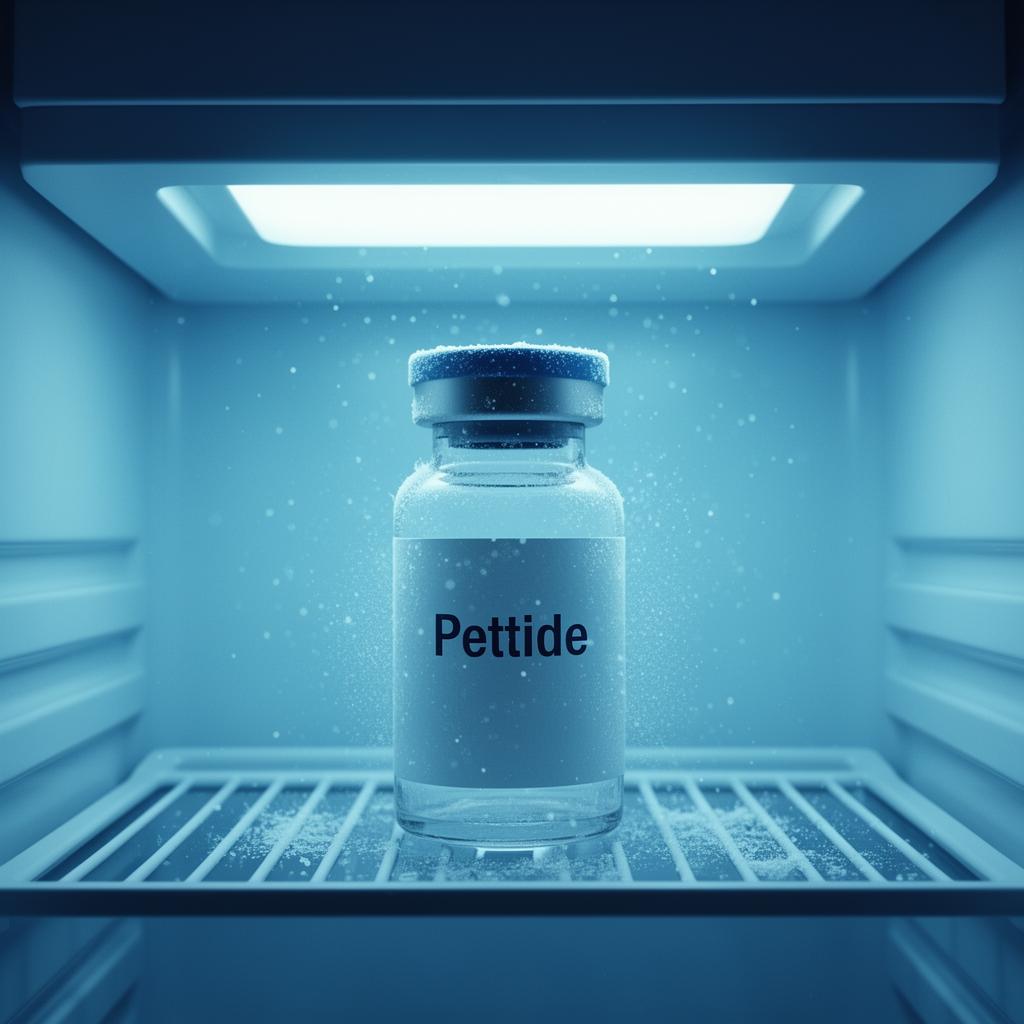
A dry peptide vial and a mixed peptide vial behave differently in storage. Powder is more stable — it tolerates a freezer for long stretches. Once BAC water hits it, the timeline tightens and the fridge becomes the right place.
Open the Peptide Calculator → Enter vial strength, BAC water volume, and your target research amount.
What This Means in Simple Terms
Two forms, two storage rules. Dry powder is rugged. Reconstituted solution is delicate. Confusing the two is the most common storage mistake.
What You Need Before You Store
- Vial form: lyophilized powder or reconstituted.
- A reconstitution date label.
- Access to a refrigerator (2–8°C) and a freezer (~−20°C).
Lyophilized (Dry) Peptide Powder
- Long-term: freezer, around −20°C.
- Short-term: refrigerator, around 2–8°C.
- Avoid: extended room temperature, humidity, direct sunlight.
Reconstituted (Mixed) Peptide Vials
After BAC water is added, the standard reference for research handling is a refrigerator at 2–8°C, used within a few weeks. Freezing a reconstituted vial is generally avoided because freeze-thaw cycles can affect peptide integrity.
Quick Reference
- Dry powder, long-term: freezer.
- Dry powder, short-term: fridge.
- Reconstituted vial: fridge only, not freezer.
- Room temperature: minimize exposure for either form.
Skip the math — run it in the Peptide Calculator and see the syringe reading instantly.
Practical Handling Tips
- Let a cold vial warm slightly before adding BAC water to reduce condensation.
- Add BAC water down the side of the vial. Swirl gently — don't shake.
- Wipe the rubber stopper with alcohol before each draw.
- Label the vial with the reconstitution date so the timeline is obvious.
Common Mistakes to Avoid
- Storing reconstituted vials in the freezer.
- Leaving mixed vials at room temperature between sessions.
- Treating dry and mixed vials the same way.
- Skipping the date label after reconstitution.
- Reusing a vial well past its reference timeline because "it still looks fine."
When to Use the Peptide Calculator
Before reconstitution — so the vial gets the right BAC water volume the first time, gets labeled with a date, and lands in the fridge with the math already done.
FAQ
How long does a reconstituted peptide vial last in the fridge?
Most research handling references a few weeks at 2–8°C, depending on the specific peptide.
How should peptide powder be stored?
Dry, sealed, away from light. Freezer for long-term, fridge for short-term.
Can I freeze a reconstituted vial?
Generally avoided. Freeze-thaw cycles can affect peptide integrity.
Does BAC water extend shelf life?
BAC water contains benzyl alcohol, a preservative that helps slow microbial growth, which is why it's used for reconstitution.
What temperature is "room temperature" too long?
There's no single number. Minimize room-temperature exposure and return vials to refrigeration promptly.
Should I store vials upright or on their side?
Upright is the common default — it keeps the stopper dry and reduces contact with the seal.
Run your numbers in the Peptide Calculator before reconstituting — so the vial is dated, labeled, and stored correctly from the start.